Outdoor builds
Outdoor Pole Pads for Parks and Open Courts
Outdoor pole pads face problems indoor padding never sees: sun, standing water, freezing nights, mower decks and casual vandalism. This page covers what changes once padding leaves the gym, how to write an outdoor spec that holds up, and how to order for the season ahead.
- Shipping
- All 48 contiguous states.
- Installation by our own crews
- New Jersey, New York, Connecticut, eastern Pennsylvania, plus the Austin and Houston markets in Texas. Coverage detail
Outside our installation markets we ship the product for installation by you or your contractor. Coverage states are New Jersey, New York, Connecticut, eastern Pennsylvania, the Austin and Houston metros in Texas.
What actually changes when padding goes outside
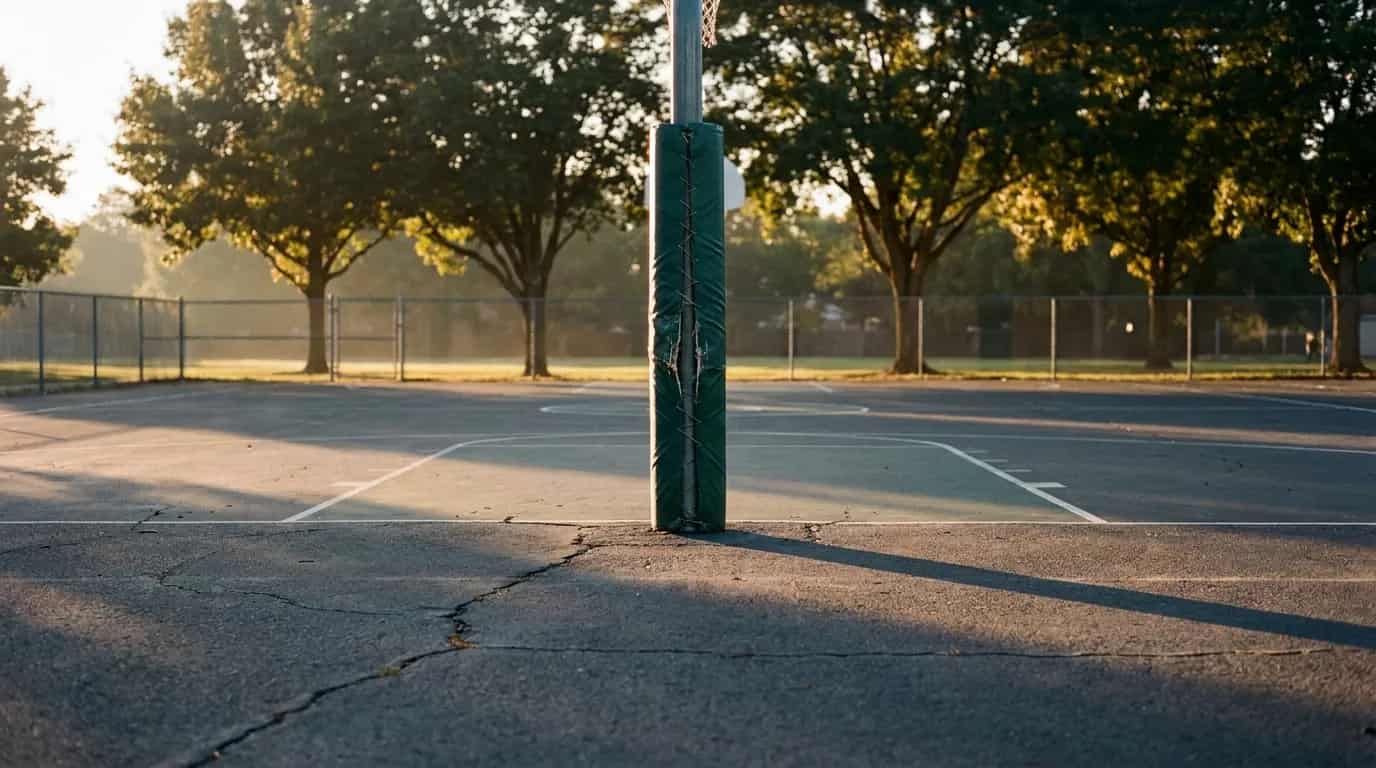
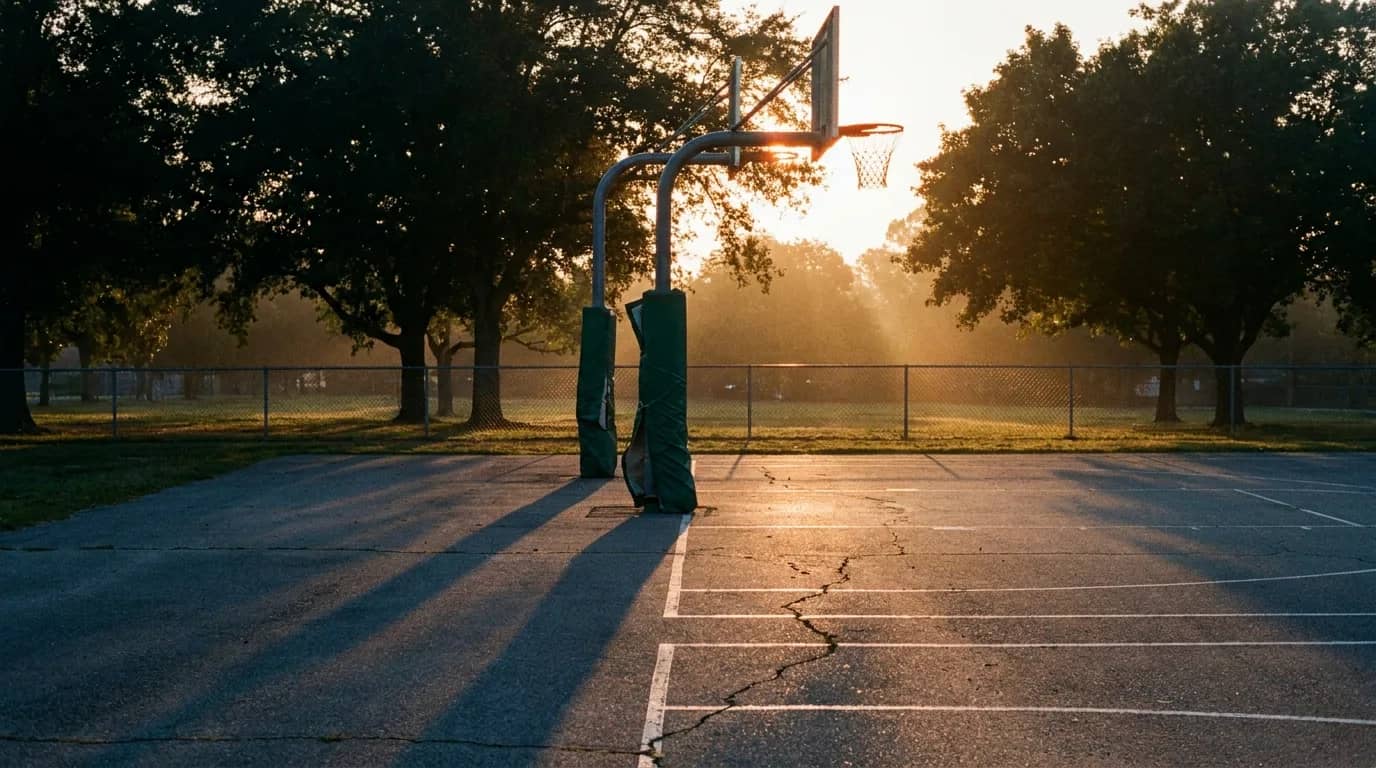
Indoor pole pads live in a climate-controlled gym. A park basketball pole pad lives in weather, and three forces do most of the damage. Sunlight breaks down pigment and plasticizer in the vinyl, so a pad that starts scarlet fades toward pink on the south and west faces long before the rest of it looks tired. Water is the second. Rain that runs down a post and gets behind the pad has nowhere to drain, so it sits against the steel and feeds mildew on the foam and the vinyl backing.
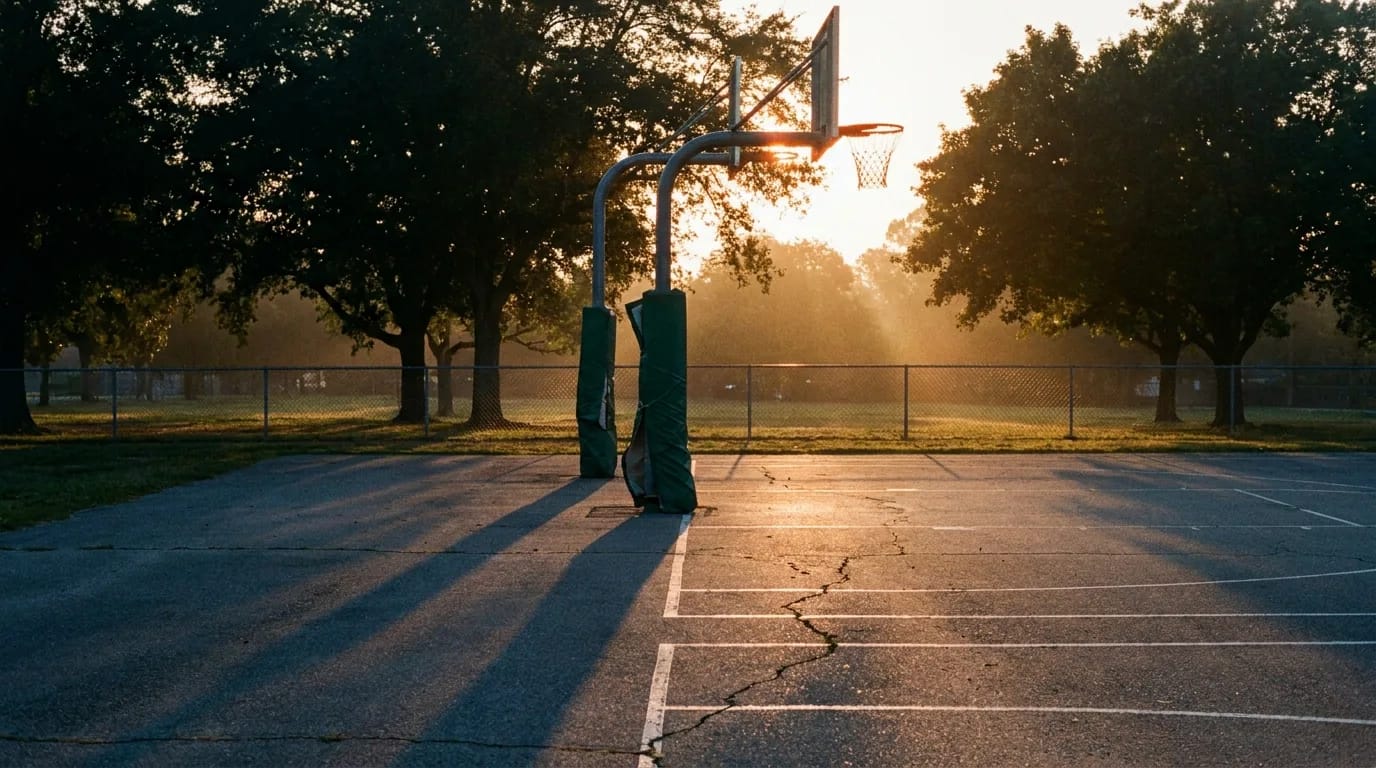
Freeze-thaw cycling is what usually ends an outdoor pad. Trapped water expands as it freezes, which stresses seams and stitching, then the pad flexes back as the day warms and does it again the next night. Vinyl also stiffens in January and softens in July, so the closure has to hold in both states. Then there is everything a gym never deals with: string trimmers chewing the bottom edge, mulch piled against the pad by a landscaping crew, and pads that get tagged, cut or walked off with overnight because nobody locks a public park. Compare that with indoor gym wall padding, which mostly fails from ball impact and shoe scuffs.
- UV fades the sun-facing panel first, so a row of pads looks mismatched before any of it fails
- Water trapped behind the shell feeds mildew and stresses stitching through every freeze-thaw cycle
- Keep the bottom edge above the mulch, soil and turf line so the pad can dry between rains
- String trimmers and mower decks chew the bottom few inches of an outdoor pad
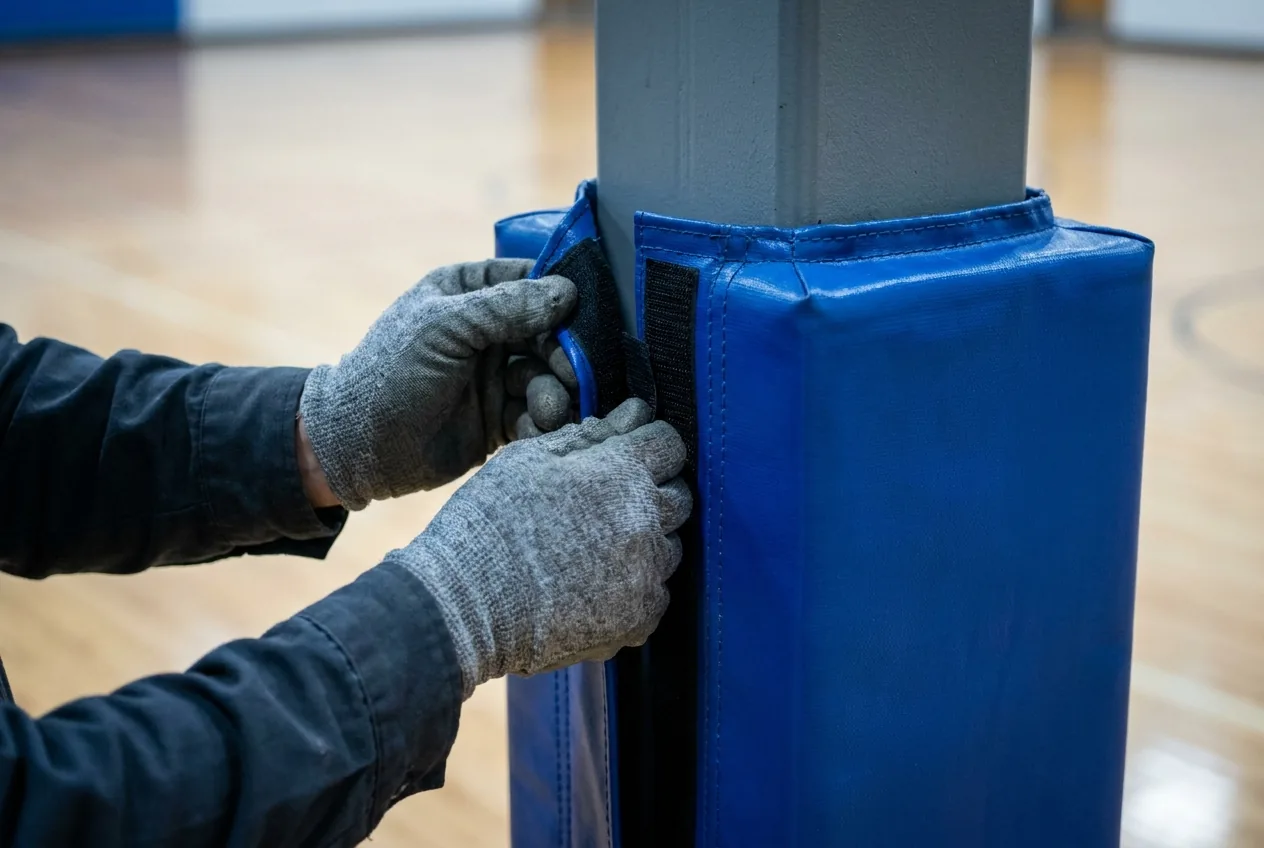
- Full-length hook and loop closure lets a crew pull pads for cleaning or winter storage
The outdoor standards gap, and how to write around it
ASTM F2440 is the impact attenuation specification for wall padding in indoor sports venues, and what F2440 actually measures is explained alongside our foam and vinyl construction detail. The boundary is the part that matters here: it applies indoors. No published ASTM standard governs outdoor wall and fixed-object padding today, though ASTM has an active work item covering that application.
That gap shows up in bid documents. Park and recreation specs are often copied from a gym project, so they cite F2440 for a set of poles that sit in an open public park. The standard being referenced does not address that application, and no supplier can honestly certify to it outdoors. We do not claim our products are certified or compliant with F2440. If your spec package needs language, ask us and we will tell you exactly what we can document about construction, materials and dimensions.
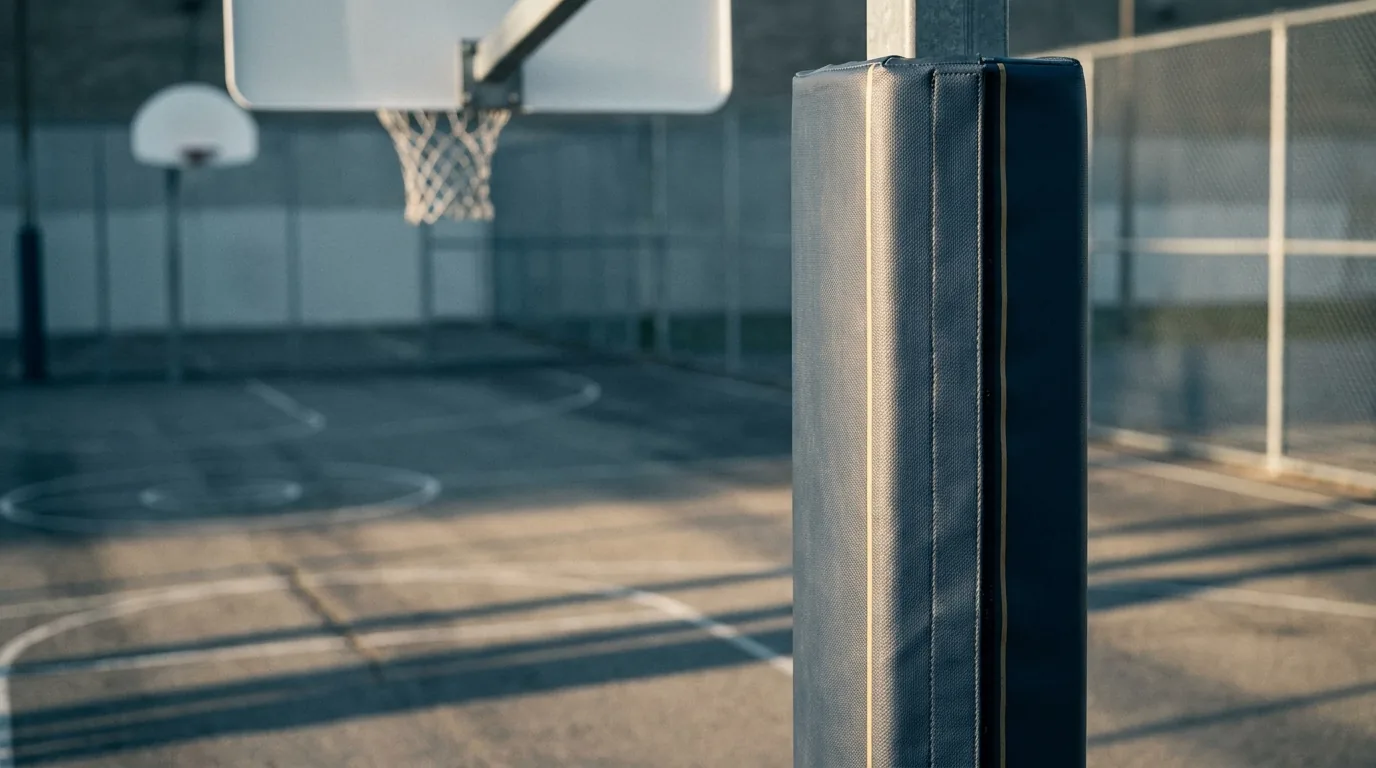
Governing body rules were written for indoor play too. NFHS basketball asks for at least 3 feet, and preferably 10 feet, of unobstructed space outside the boundaries, and it requires portable backstop bases to be padded to 7 feet on the court-side surface. Outdoor courts almost never have 10 feet of run-off, which is exactly why the goosenecks, fence posts and light poles sitting inside that margin are the ones that get padded first.
Where the money goes on a pad that lives outside
Vinyl weight is the single decision that separates an outdoor pad that lasts from one that does not, and outdoors the answer is almost always the heaviest weight the budget will carry. The weight tiers and foam construction are broken down on that same materials page. The exception is worth knowing: a covered pavilion post, or a seasonal setup that gets stored inside from November to March, does not need premium vinyl. Buy the stock pad, spend the savings on quantity and cover more hazards, because a half-padded court is more dangerous than a fully padded one in lighter vinyl.
Color has a durability angle outdoors. All vinyl fades under sustained UV, and saturated colors like Scarlet, Royal Blue and Purple show the change faster than Grey, Black, Saddle Brown or Desert Gold. We stock 16 colors. If you expect to replace pads a few at a time as they get damaged, buy a spare or two with the original batch. A pad ordered three summers later will not match a row that has been in the sun, even in the same stock color.
Public parks are unsupervised most of the day, so plan for tagging and tampering rather than treating it as a surprise. Clean pads with mild soap and water instead of solvent wipes, which strip the surface coating and leave a dull patch that then fades faster than the panel around it. When the shell and foam are still sound but the graphic is ruined, a pole pad decal with application starts at $119.99 and refreshes the look for far less than a replacement. Custom printed pole pads start at $373.99, and the artwork and proofing requirements are covered on that page.
Sizes, part numbers and ordering for the season
There is no standard post size in this industry, so measure the actual post and follow the round and square post method in our measuring guide before ordering. Outdoors that matters twice over, because park posts are frequently direct-buried steel set by eye rather than framed to a drawing, and because a pad that runs slightly large still closes while one that runs slightly small does not close at all.
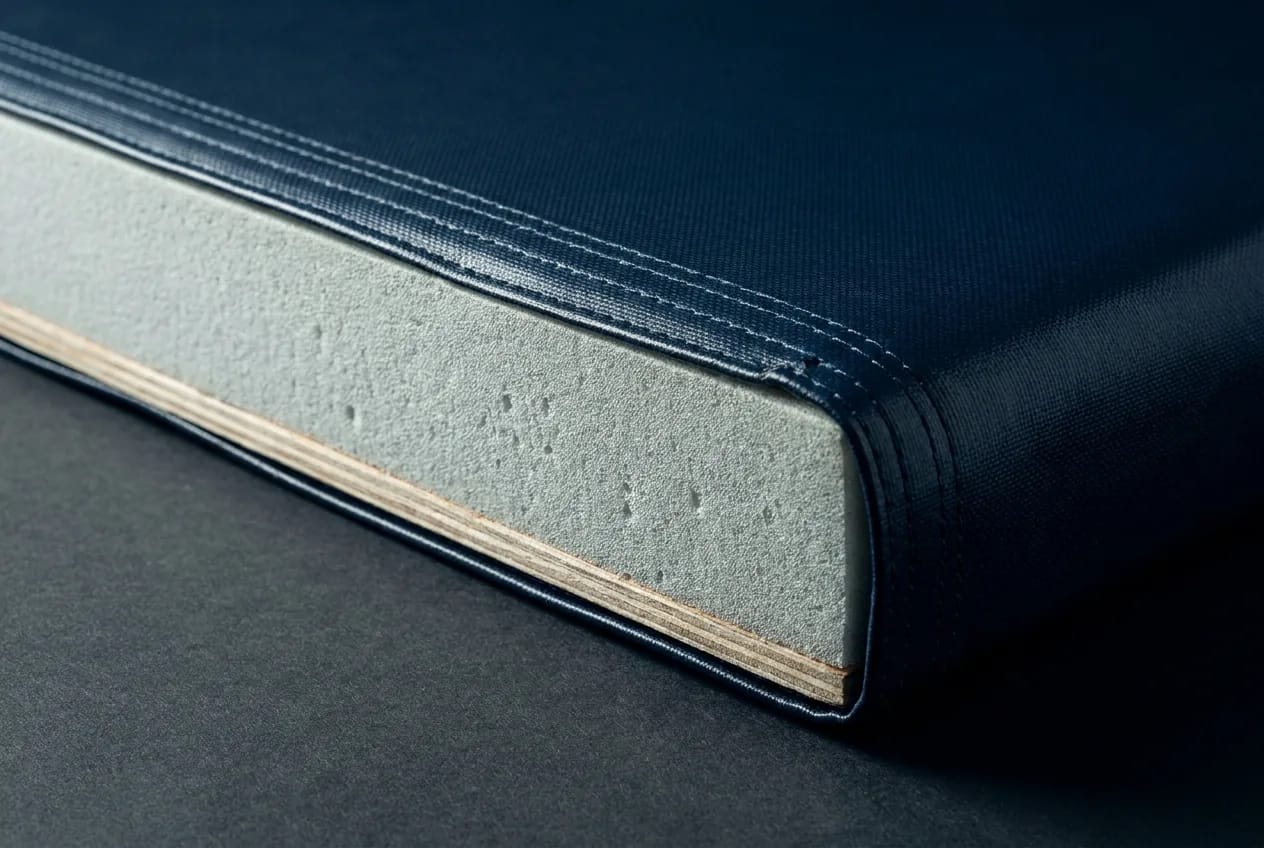
Outdoor court orders usually mix pole pads, base and gusset pads and wall panels. Pads use a 2 in foam core, a heavy-duty coated vinyl outer and a full-length hook and loop closure, and backed wall panels add 7/16 in plywood. Padding carries a 1-Year Limited Warranty. Stock items generally ship in 2 to 3 business days, so a spring stock order placed a few weeks before leagues start is straightforward. A printed order placed in that same week is not, because artwork and proofing add time on the front end.
Send post dimensions, quantities, colors and a note about whether the pads stay up through winter to sales@mybackyardsports.com, or call 917-546-4625 or 877-466-7101. Flag any post that sits in a low spot holding water after rain. Those are the ones worth putting the heavier vinyl on, and the ones worth pulling first in the fall.
- FT75 pole pad for 4 in and 5 in square posts, from $254
- FT78 6x6 pole pad from $307, FT79 6x6 pad and gusset from $402
- FT80P 6x8 pad only from $291, FT80 6x8 pad and gusset from $436
- FT77 base and gusset pad from $146, pole pad decal and application from $119.99
- Wall pads from $152 foam only or $172 plywood backed, in 2 ft x 6 ft and 2 ft x 8 ft
Do outdoor pole pads have to meet ASTM F2440?
No. F2440 is written for wall padding in indoor sports venues and does not address outdoor installations. No published ASTM standard governs outdoor wall and fixed-object padding yet, though an active work item covers it. We do not claim compliance for our products, and we will confirm exactly what we can document on request.
Should outdoor pole pads come down for the winter?
If the courts are effectively closed anyway, yes. Pulling pads in late fall stops water from freezing behind the shell, keeps the stitching out of the worst of the freeze-thaw cycle and adds seasons to the pads. A full-length hook and loop closure makes removal a short job per post. Store them dry and flat, not stacked on a damp shed floor.
How long do outdoor pole pads last?
It depends on sun exposure, drainage and traffic, so we will not quote a number we cannot back up. Heavier vinyl, a pad that is not sitting in standing water, and removal for winter storage all extend service life. Our padding carries a 1-Year Limited Warranty.
What do I do when a pad gets tagged or cut?
Clean graffiti with mild soap and water rather than solvent, which dulls the coating and creates a patch that fades faster than the rest of the pad. If the shell and foam are still sound but the graphic is gone, a pole pad decal with application starts at $119.99. If the shell is cut through to the foam, replace the pad, because an open shell lets water into the core and the foam will not dry out.
Start a quote
Send us the
measurements.
Tell us the post size or the wall run, the colors you need, and whether it lives indoors or out. You will get a written quote back with a real lead time on it.
- A written lead time on every quote
- Purchase orders and W9 on request
- A proof before anything is cut