Answers
Everything buyers ask us
Measuring, pricing, lead times, purchase orders, fire ratings and warranty. If the answer you need is not here, call us and we will give it to you straight.
Answers
Questions, answered plainly
How do I measure for a basketball pole pad?
For a square post, measure all four sides independently, because posts are not always square. For a round post, wrap a tape around it and divide the circumference by 3.14. If the result falls between two sizes, round up. There is no universal post size in this industry, so measuring beats assuming.
How much does a custom basketball pole pad cost?
Stock pole pads start at $146 for a base and gusset pad and run to $436 for a complete 6 by 8 inch set. Custom printed pads start around $374. Final pricing depends on post size, indoor or outdoor build, and whether you are adding lettering or a full logo.
What is the lead time on custom pole pads?
Stock items generally ship within two to three business days. Custom printed pads take longer because artwork has to be proofed and approved before anything is cut. We put a specific lead time in writing on every quote rather than making you chase it, and we tell you if a date is at risk.
Do you accept school purchase orders?
Yes. We work with school districts, universities, parks departments and municipalities on purchase orders, and we can provide a W9 and a formal written quote for your business office. Tell us what your requisition process needs and we will format the paperwork to match it.
How thick should gymnasium wall padding be?
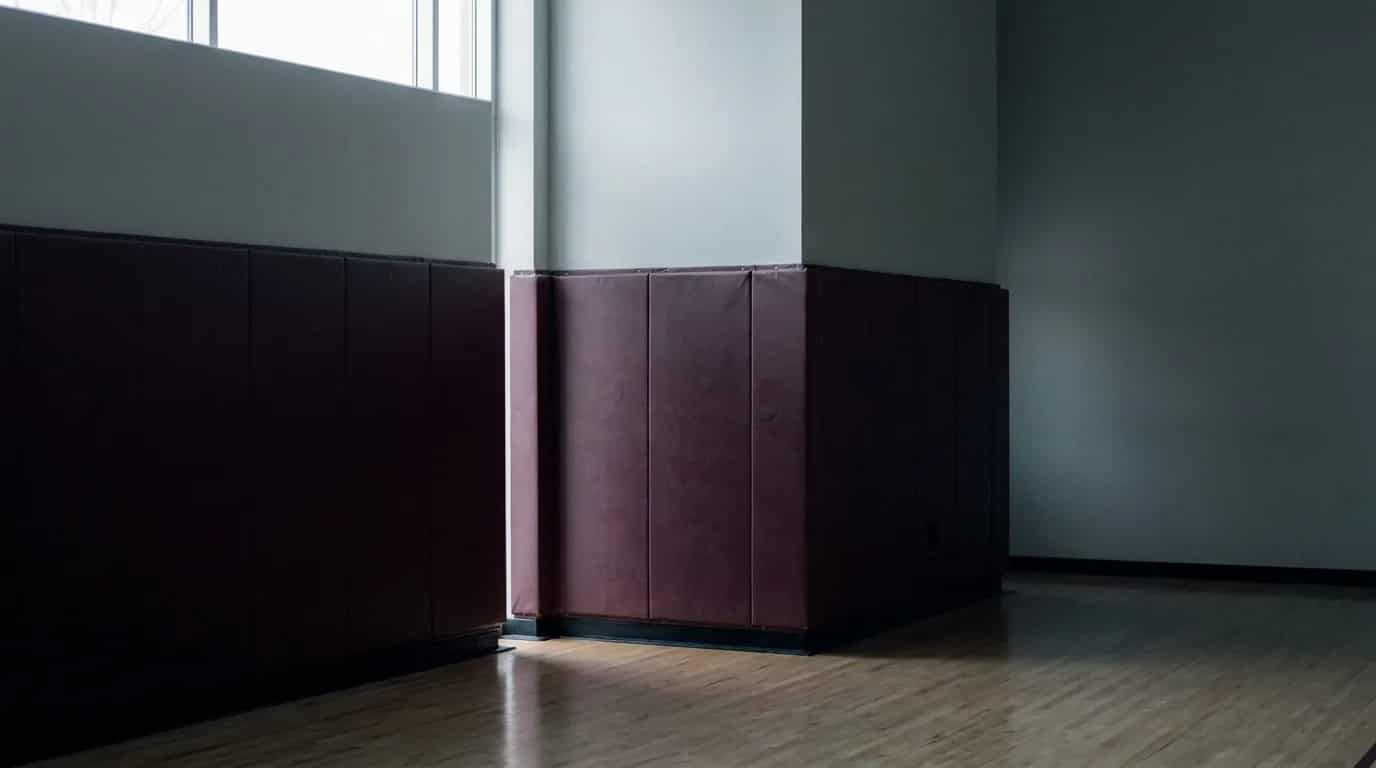
Two inches is the working standard for indoor gym walls. Thickness alone does not determine safety though. What matters is how the finished pad resists deflection under impact, which is why padding should be evaluated as a complete assembly rather than by foam thickness or density in isolation.
What is ASTM F2440?
ASTM F2440 is the specification for impact attenuation of wall padding in indoor sports venues. The current edition is F2440-24. It sets limits of 200 Gmax and 1000 HIC, and calls for padding to be mounted no more than four inches above the playing surface.
What is the difference between plywood-backed and foam-only wall pads?
Plywood-backed panels have a rigid board behind the foam, so they span uneven block walls and hold their shape under repeated contact. Foam-only panels are lighter and cost less, and they work well on walls that are already flat and sound. We will tell you which one your wall needs.
Do pole pads fit both round and square posts?
Yes, though they are different products. Our 4 and 5 inch pad also fits most round posts, while 6 by 6 inch and 6 by 8 inch pads are built specifically for square and rectangular posts. Send us your measurements and we will confirm the fit before you order.
What artwork do you need for a printed pole pad?
Vector artwork is best, in EPS, AI or PDF format, with fonts converted to outlines. If you only have a raster file, send it at 300 dpi at final print size. We return a proof showing placement and scale on your actual pad before anything goes into production.
Do you install, or do you only ship?
Both. We ship to all 48 contiguous states. Our own installation crews cover New Jersey, New York, Connecticut, eastern Pennsylvania, and the Austin and Houston markets in Texas. Outside those areas, pole pads wrap and close with hook and loop, so most facilities install them without a contractor.
Are gym wall pads fire rated?
Padding for school gymnasiums is normally specified as ASTM E84 Class A, meaning a flame spread index of 0 to 25. Class A is the same band that older code language calls Class I. Tell us what your local code official requires and we will confirm what we can document for your build.
What does the warranty cover?
Padding carries a 1-year limited warranty covering defects in materials and workmanship. It does not cover damage from misuse, abuse or normal wear. If something is wrong with how a pad was built, contact us with photos and your order details and we will make it right.
Can pole pads be left outside year round?
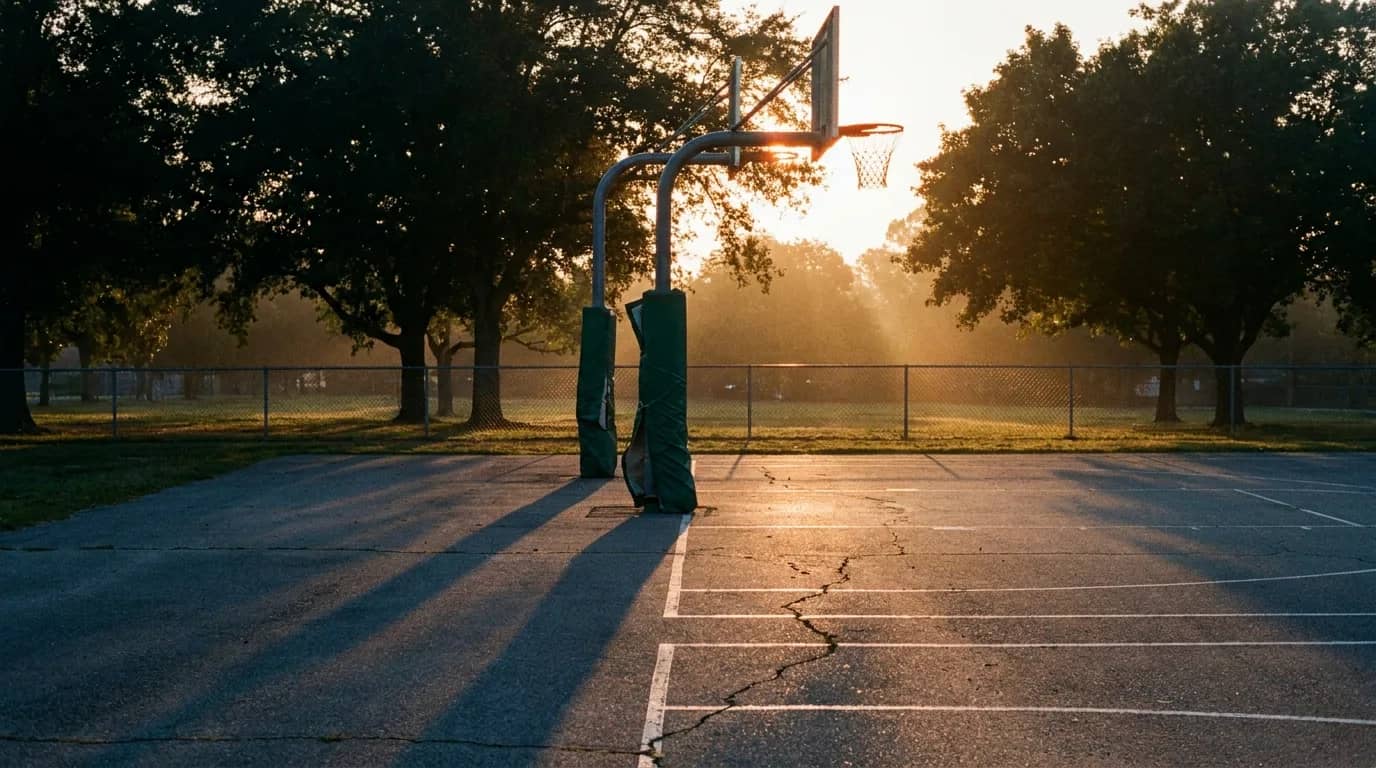
Outdoor pads are built for it, using vinyl treated for UV and mildew resistance. Indoor-specified pads left outside will chalk, stiffen and fail early. Tell us at quote stage that a court is exposed, because the right build for an outdoor post is not the same as the indoor one.
How high off the floor should wall padding be mounted?
ASTM F2440 calls for indoor wall padding to sit no more than four inches above the playing surface, so there is no unpadded gap at ankle height. Some installers specify four and a half inches over wood floors to let the floor breathe, which does exceed the standard's maximum.
Start a quote
Send us the
measurements.
Tell us the post size or the wall run, the colors you need, and whether it lives indoors or out. You will get a written quote back with a real lead time on it.
- A written lead time on every quote
- Purchase orders and W9 on request
- A proof before anything is cut