Industries
Pole Pads for HOA and Community Amenity Courts
Your board approves this at a meeting, your manager cuts the PO, and a resident asks about it at the annual meeting. We quote pole padding so it survives all three.
- Shipping
- All 48 contiguous states.
- Installation by our own crews
- New Jersey, New York, Connecticut, eastern Pennsylvania, plus the Austin and Houston markets in Texas. Coverage detail
Outside our installation markets we ship the product for installation by you or your contractor. Coverage states are New Jersey, New York, Connecticut, eastern Pennsylvania, the Austin and Houston metros in Texas.
Getting it through the board, not just the budget
Most of our HOA orders move through three people: a resident director who noticed the problem, a community manager who collects the quotes, and the rest of the board voting on it in an open meeting. The number has to read the same way to all three. Ask us to itemize by post size, quantity and color so nobody at the table has to guess what is included, and so the treasurer can code the invoice correctly when it lands.
Two things stretch an HOA timeline that a school or a club never deals with: governing documents that require competing bids above a dollar threshold, and a board that meets once a month. Tell us your threshold and your meeting date when you ask for pricing, and we will lay the line items out in a form that drops straight into the board packet next to the other bids. If the vote gets tabled to the following month, ask us to re-issue rather than presenting a stale number a resident can pick apart.
Have whoever walks the court take the post measurements before the quote goes into the packet, because there is no standard post size in this industry and a re-measure after the vote costs you a full meeting cycle: how to measure a post is written so a volunteer with a tape measure gets it right in one pass.
- Post count and size for every post you want covered, measured, not estimated.
- Whether the community manager or the board treasurer issues the purchase order.
- Your next two meeting dates, so the quote is still current when it is voted on.
- The color settled before the vote, so the approval does not have to be reopened.
- A delivery address where someone can sign for a freight shipment on a weekday.
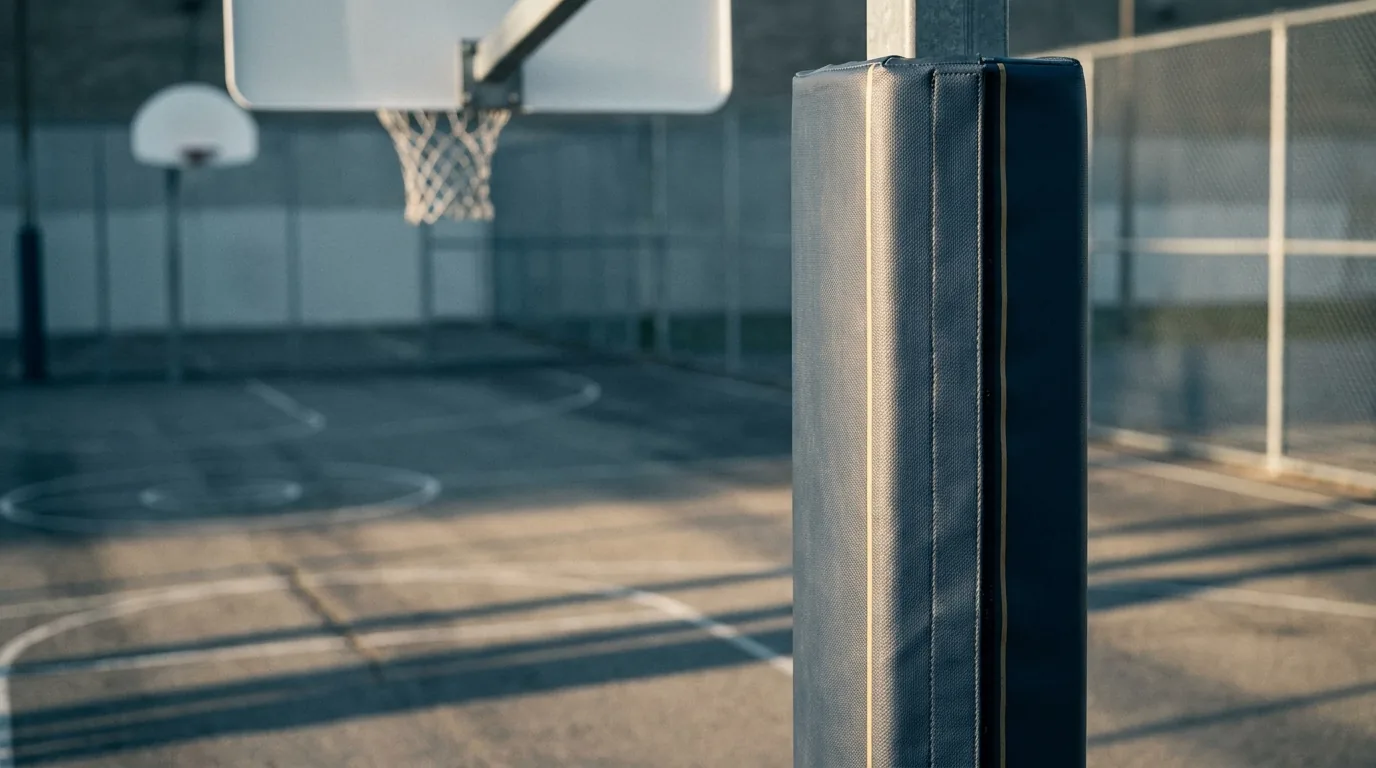
Reserve line item or operating expense
Padding is a short lived component, which means a reserve specialist can assign it a useful life and a replacement cost and carry it in the component inventory. Boards that fund it that way stop treating every pad as a surprise. One court's worth of replacement padding usually sits comfortably in the operating budget. Several courts at once, or a full amenity refresh, belongs in the reserve schedule where it will not distort a single year's assessment.
Bring real numbers to the fall budget cycle instead of a placeholder you have to defend in the spring. Stock pole pads start at $254 for 4 inch and 5 inch square posts, $307 for a 6x6, and $436 for a 6x8 with a gusset. If your community sits in one of the markets where we run our own crews, ask for installation as its own line so the board can approve labor and material in a single motion.
Keep the quote, the invoice and the dated photos in the association's records rather than in one manager's inbox. Boards turn over, management companies get replaced, and the next reserve update will ask when this component was last touched. A one page record now is what keeps that answer from being a guess in five years.
- FT75 pole pad for 4 in and 5 in square posts, from $254.
- FT78 6x6 pole pad from $307; FT79 6x6 pad and gusset from $402.
- FT80P 6x8 pad only from $291; FT80 6x8 pad and gusset from $436.
- Pole pad decal and application from $119.99 to carry the community name.
- Prices are starting points; final cost depends on size, color and quantity.
The question your insurance carrier will ask
Loss control inspectors flag bare steel and bare wood next to a play surface, and the board hears about it at renewal, usually with a deadline attached. What the carrier generally wants is evidence that the hazard was addressed and a photograph of the finished court. Send the invoice, the product description and a dated photo, and put the board's vote in the minutes. That packet answers the question faster than any argument about standards.
If a director asks whether the padding is certified, give them the honest answer: we do not claim certification to any standard, and the impact attenuation specification people usually have in mind was written for indoor wall padding in competition venues rather than an outdoor pole pad on a neighborhood court. Tell us what your carrier actually asked for and we will confirm in writing whatever we can document, because a documented product description plus a dated photo is usually what closes the item out.
It also helps to know who is not inspecting your court. High school and college athletic associations write padding rules for competition venues, not for an HOA amenity court, and no association official is going to walk your property. Your carrier, your residents and eventually an attorney are the only inspectors you have. That is why most boards act after a complaint or a claim instead of before one, and why the boards that act early are usually the ones just coming off a hard renewal.
Colors residents live with every day
A school repaints every few years. Your community looks at this court from a kitchen window for a decade, and chalked or faded vinyl reads as neglect long before it actually fails. For anything mounted outdoors year round, specify the heavier premium vinyl weight rather than the low cost indoor baseline, and use our breakdown of vinyl weights and foam construction if the board wants the reasoning in the packet.
Run the color past your architectural review committee before the vote, not after. Sixteen stock vinyl colors are available. Boards that want the padding to disappear into the landscaping pick Forest Green, Saddle Brown, Grey or Black. Boards that want the community name on the court add a decal from $119.99 or order a custom printed pad from $373.99, which runs longer because the artwork has to be proofed and approved before anything is produced.
Order the whole court on one purchase order. Communities that add one pad per budget year end up with four shades of blue and a complaint at the annual meeting, because dye lots and sun exposure both move. If your court sits idle over the winter, pulling the pads in November and storing them in the maintenance closet buys years on the same set, and it is the cheapest thing on this page.
- Hook and loop closure means a landscaper or handyman can wrap the posts.
- Confirm gate codes and clubhouse access before anyone arrives with pads.
- Freight needs a person on site; a clubhouse with no dock needs a liftgate.
- Padding carries a 1-Year Limited Warranty; file it with the association records.
- Graffiti usually wipes off vinyl; deep cuts do not, so budget one spare pad.
Our board needs three bids. Can you format a quote that compares cleanly?
Yes. Ask us to break it out by post size, quantity and color so it lines up against competing bids item for item instead of arriving as one lump sum. Send your meeting date with the request and we will make sure the pricing you present is still current when the board votes, and re-issue it if the vote gets tabled.
Is this padding certified for our insurance carrier?
We do not claim certification to any standard. The impact attenuation specification boards usually hear about was written for indoor wall padding in competition venues, not for an outdoor pole pad on a neighborhood court. Tell us exactly what your carrier asked for and we will confirm in writing what we can document, which is normally enough to close out a loss control item.
We have no maintenance staff. Who installs these?
Pads close with a full length hook and loop strip, so they wrap the post without hardware or a drill. Most communities have their landscaper, handyman or a willing board member handle it in an afternoon. If your community sits in one of the markets where we field our own crews, ask for installation as its own line on the quote so the board approves labor and materials in one vote.
How do we budget for this in the reserve study?
Treat padding as a short lived component with its own useful life and replacement cost in the component inventory. Starting prices run $254 for a 4 inch or 5 inch square post pad and $436 for a 6x8 pad with gusset, which gives your analyst a defensible number rather than an allowance. If you are covering several courts, phase them in the funding plan instead of absorbing all of it in one assessment year.

Start a quote
Send us the
measurements.
Tell us the post size or the wall run, the colors you need, and whether it lives indoors or out. You will get a written quote back with a real lead time on it.
- A written lead time on every quote
- Purchase orders and W9 on request
- A proof before anything is cut