Materials and standards

What is actually inside a pad

Most padding is sold on adjectives. This page is the specification conversation instead: what the layers do, which standards genuinely apply, and where the industry quietly overstates its case.

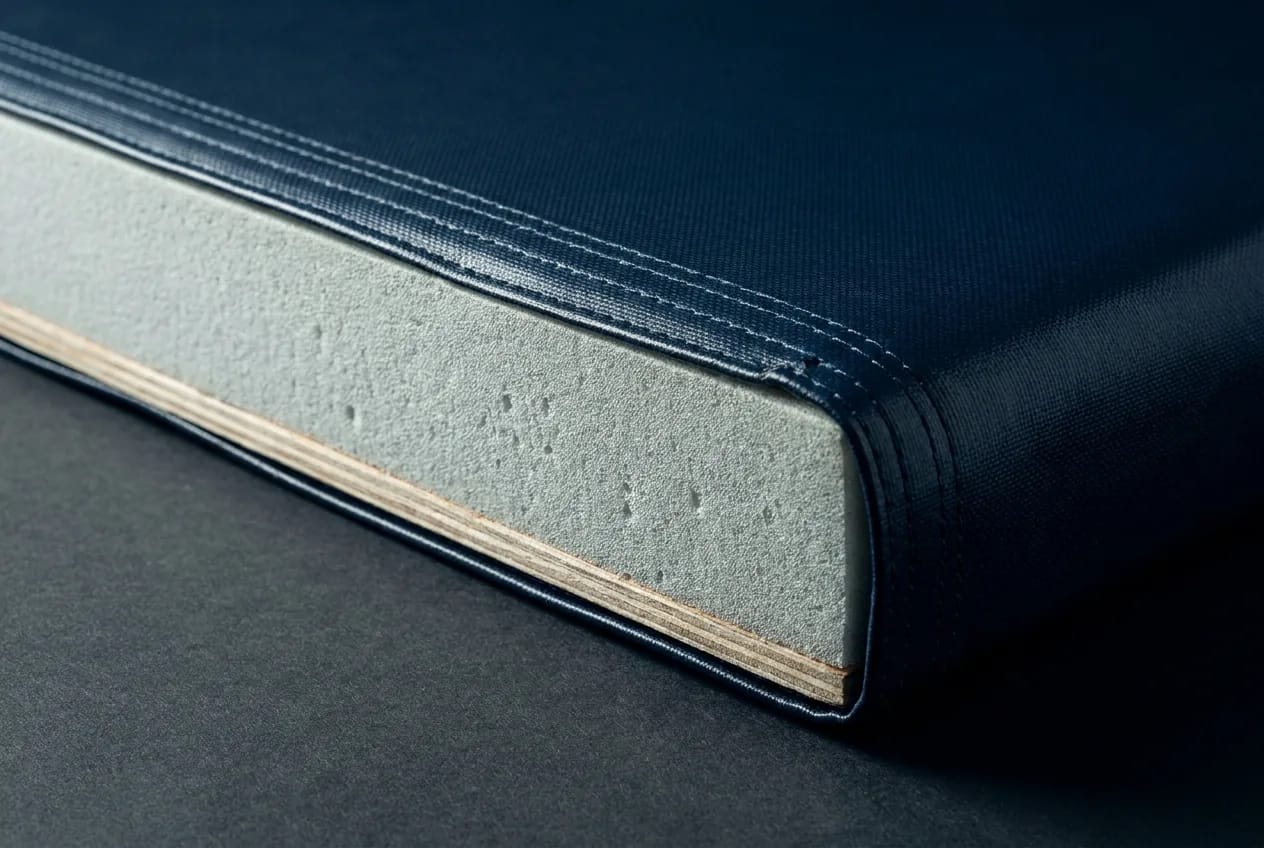
Cross section of a wall pad showing navy vinyl skin, grey foam core and plywood backing

The layers

Three materials, one job

Foam is the part that absorbs the hit. Our pads use a 2 inch core, which is the working standard for indoor gym walls and for post padding. Depth is only half the equation though. A thick, soft foam can bottom out under a real impact while a thinner, firmer one keeps resisting, which is exactly why a pad has to be evaluated as a finished assembly rather than by its foam specification in isolation.

Vinyl is the skin that takes every point of contact and every cleaning cycle. Weight is measured in ounces per square yard and it works as a durability ladder: 14 oz is the low-cost indoor baseline, 16 oz knife-coated buys real abrasion resistance, and 18 oz is the premium weight used on the hardest-working surfaces indoors and out. Outdoor builds also need the vinyl treated for UV and mildew, or it chalks and stiffens within a season.

Backing is optional and should be treated that way. A 7/16 inch plywood board behind the foam spans uneven concrete block and keeps a panel flat under repeated contact. On a flat, sound wall it adds cost and weight for no benefit. We will tell you which one your wall actually needs.

Standards

What the specifications actually say

Three documents come up in almost every gymnasium padding conversation. Here is what each one covers, and where it stops.

ASTM F2440-24

Impact attenuation of indoor wall padding

The specification that actually governs indoor wall padding performance. It sets a ceiling of 200 Gmax and 1000 HIC, and calls for padding to be mounted no more than 4 inches above the playing surface so there is no unpadded gap at ankle height. It classifies pads by whether they are permanently attached or removable, and by how the cover is applied.

Ask any supplier which edition they are citing. Older editions are still quoted across this industry as though they were current.

ASTM E84 Class A

Surface burning characteristics

A flame spread index of 0 to 25 puts a material in Class A, the band most school gymnasium specifications call for. Class A is the same band that older code language refers to as Class I, so the two terms are not competing claims.

Class A describes a material test. It is not by itself proof that a finished assembly satisfies your local building code.

NFHS basketball

Playing space and backstop padding

NFHS rules call for at least 3 feet, and preferably 10 feet, of unobstructed space outside the boundaries. Portable backstop bases must be padded to a height of 7 feet on the court-side surface, and a 9 foot backboard support must be padded 2 feet out from the backboard face.

The backstop base requirement is a requirement, not a recommendation. It is the one most often missed.

What we will and will not claim

We build padding to the construction described above. We do not advertise ASTM F2440 certification, because certification means a test report on a specific finished assembly, and claiming it without one would be worth nothing to you and a problem for us. If your specification calls for documented test data, tell us at quote stage and we will tell you plainly what we can and cannot document for the build you need.

Answers

Specification questions

See every question

What is ASTM F2440 and does my gym need to meet it?

F2440 is the specification for impact attenuation of indoor sports wall padding, currently in its 2024 edition. It sets limits of 200 Gmax and 1000 HIC. Whether you must meet it depends on your governing body and your written specification, so check both before you buy.

What weight vinyl should gym padding use?

Vinyl weight is a durability tier rather than an indoor or outdoor split. Fourteen ounce is the low-cost indoor baseline, sixteen ounce knife-coated is a real abrasion upgrade, and eighteen ounce is a premium weight used both indoors and outdoors on high-traffic surfaces.

Is thicker foam always safer?

No. Thickness alone does not determine how a pad performs on impact. What matters is how the finished assembly resists deflection, which depends on the foam's firmness as much as its depth. This is why padding should be judged as a complete unit rather than by foam specification alone.

Do I need plywood backing on wall pads?

Only if the wall needs it. Rigid backing spans uneven concrete block and holds a panel flat under repeated contact. On a wall that is already flat and structurally sound, a foam-only panel is lighter, cheaper to ship and performs the same job.

An empty outdoor park basketball court at sunrise with green padding wrapped around the goal post

Start a quote

Send us the
measurements.

Tell us the post size or the wall run, the colors you need, and whether it lives indoors or out. You will get a written quote back with a real lead time on it.

  • A written lead time on every quote
  • Purchase orders and W9 on request
  • A proof before anything is cut