
Wall padding
Gym Wall Padding and Custom Gym Wall Pads
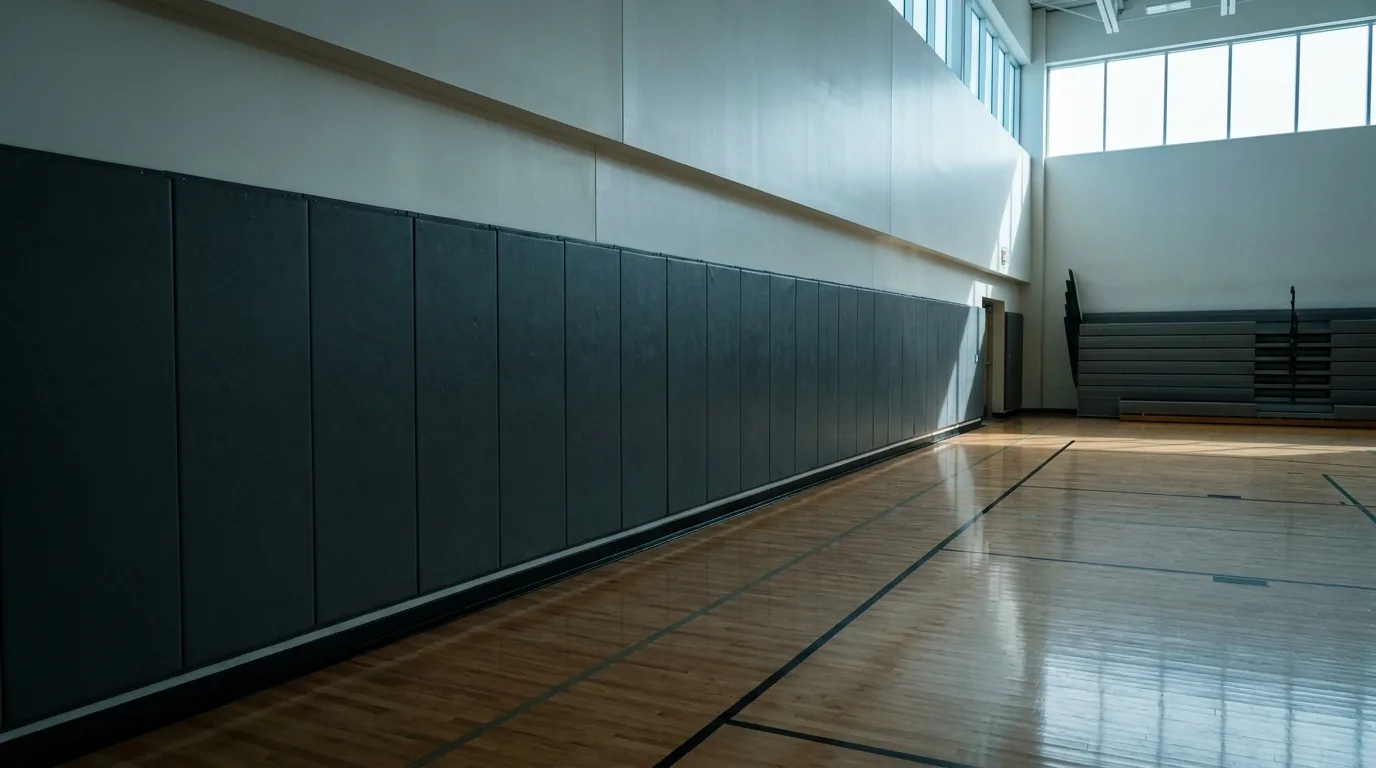
Gym wall padding comes down to one decision most buyers get wrong: foam-only or plywood-backed. The pads look identical once they are on the wall. What changes is how the wall behind them behaves, what fastener your installer reaches for, and how the panel layout falls across doors and outlets.
- Shipping
- All 48 contiguous states.
- Installation by our own crews
- New Jersey, New York, Connecticut, eastern Pennsylvania, plus the Austin and Houston markets in Texas. Coverage detail
Outside our installation markets we ship the product for installation by you or your contractor. Coverage states are New Jersey, New York, Connecticut, eastern Pennsylvania, the Austin and Houston metros in Texas.
Foam-only or plywood-backed: how to choose
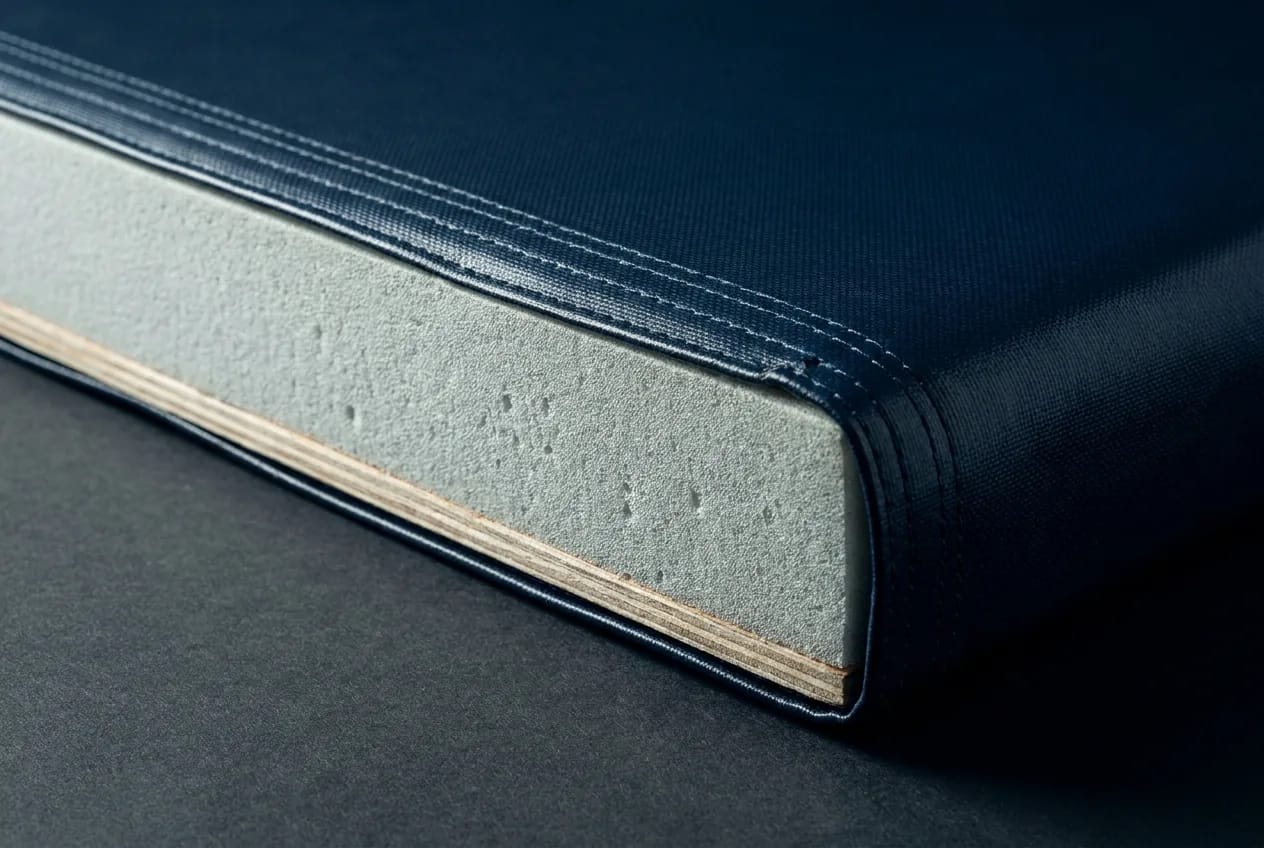
Foam-only pads and plywood-backed pads use the same 2 in foam core and the same coated vinyl skin. The difference is what sits behind the foam. A foam-only pad is flexible, lighter, and cheaper at $152. A plywood-backed pad adds a 7/16 in plywood panel at $172, which holds the pad flat and rigid and gives a fastener something solid to bite.
Foam-only is the right call more often than buyers expect. On smooth poured concrete or flat drywall over studs, a foam-only pad gives you the same 2 in impact surface for less money, and it conforms to a wall that is slightly out of plane instead of bridging across it. It is also far easier to hang: one person can hold a foam-only panel on a ladder, while a plywood-backed 2 ft x 8 ft panel is a two person lift.
Plywood backing earns its cost in three situations: block walls with mortar joints that telegraph through a foam-only pad, walls that take repeated body contact at speed, and long runs where you want clean butt joints with no visible sag between panels. The price gap is about $20 a panel, so on a three panel run you are deciding between $60 and a wall that stays flat for a decade. Let the wall decide, not the budget line.
- Foam-only wall pad, $152 to start: 2 in foam, coated vinyl, no rigid panel.
- Plywood-backed wall pad, $172 to start: adds a 7/16 in plywood panel behind the foam.
- Wood backed wall pads and plywood-backed wall pads are the same product, two names.
- Choose foam-only for flat walls, short runs, and single-installer handling.
- Choose plywood-backed for block walls, high-contact areas, and long continuous runs.
Wall type, anchors, and mounting height
The pad does not pick the fastener, the wall does, so tell us the wall type before you order. Hollow concrete block takes an anchor set in the face of the block rather than in a mortar joint, because joints crumble under a shear load. A stud wall takes lags landed in framing, which is one more reason plywood-backed panels suit stud walls: the panel carries the span between studs instead of leaving the foam to sag. Poured concrete takes a masonry anchor and is the most forgiving of the three. Field crews should confirm what is behind the finish before the first hole, especially in older gyms where a furred-out wall hides the structure.
Mounting height is the other detail installers get wrong. ASTM F2440 describes indoor wall padding mounted no more than 4 inches above the playing surface, and what that standard actually measures, including its Gmax and HIC limits, is covered on our materials page rather than repeated here. Give us the dimension your reviewer wants for the bottom edge and we will size the panel to it.
Concrete block walls are rarely flat. Mortar joints, patched courses, and out of plumb sections all show through a pad mounted straight to the wall. Plywood-backed panels bridge minor irregularity. For a wall that is badly out of plane, most crews run furring strips first and mount to the strips, which also gives you a continuous fastening line instead of hunting for solid block on every panel. Measure the worst spot on the wall before you order, not the best one.
- Tell us the wall type: hollow block, poured concrete, or studs behind drywall.
- Anchor into the face of a block, never into the mortar joint.
- Note how far above the finished floor the bottom edge should sit.
- Flag walls that are visibly out of plane so we can plan panel layout and furring.
- Ask about flame spread documentation before you submit the project for approval.
Panel layout, cutouts, and door frames
Lay the run out on paper before you order. Measure the wall end to end, divide by 8 ft, and look at what is left over. A run that ends in a 9 in sliver looks like a mistake for the life of the wall, and a field-cut panel exposes raw foam at the edge. The fix is to order one custom width panel so the leftover is shared across the run or absorbed at the least visible end. Custom widths cost less than living with a bad seam.
Almost every gym wall has something in the way: receptacles, thermostats, fire alarm pulls, door frames, wall-mounted scoreboards, bleacher tracks. Cutting the pad around the obstruction beats stopping the panel short, because a gap leaves hard surface exposed exactly where a player is most likely to hit it. Send a dimensioned sketch of each run marking the distance from a fixed reference, usually a corner or a door jamb, to the center of every cutout, plus the width and height of the opening. A photo alone tells us what is there. It does not tell us where it sits.
Door frames cause the most rework. Decide early whether the pad returns into the frame, butts to the outside edge of the casing, or stops a few inches clear, because each one changes the panel width. If a door swings into the padded wall, the pad has to stop clear of the swing arc. The same planning applies to the padded goal posts and structural columns in the same gym, which are measured a different way: see how to measure a post and basketball pole pads.
- Divide the run by 8 ft first, then order a custom width panel instead of leaving a sliver.
- Never field cut a finished panel: a cut edge exposes foam and will not be warranted.
- Dimension every cutout from a fixed corner or jamb, not from the middle of the wall.
- Decide door frame treatment first: return into the frame, butt to casing, or hold clear.
- Keep panel joints away from cutouts so one short section can be replaced later.
Colors, printed graphics, and ordering
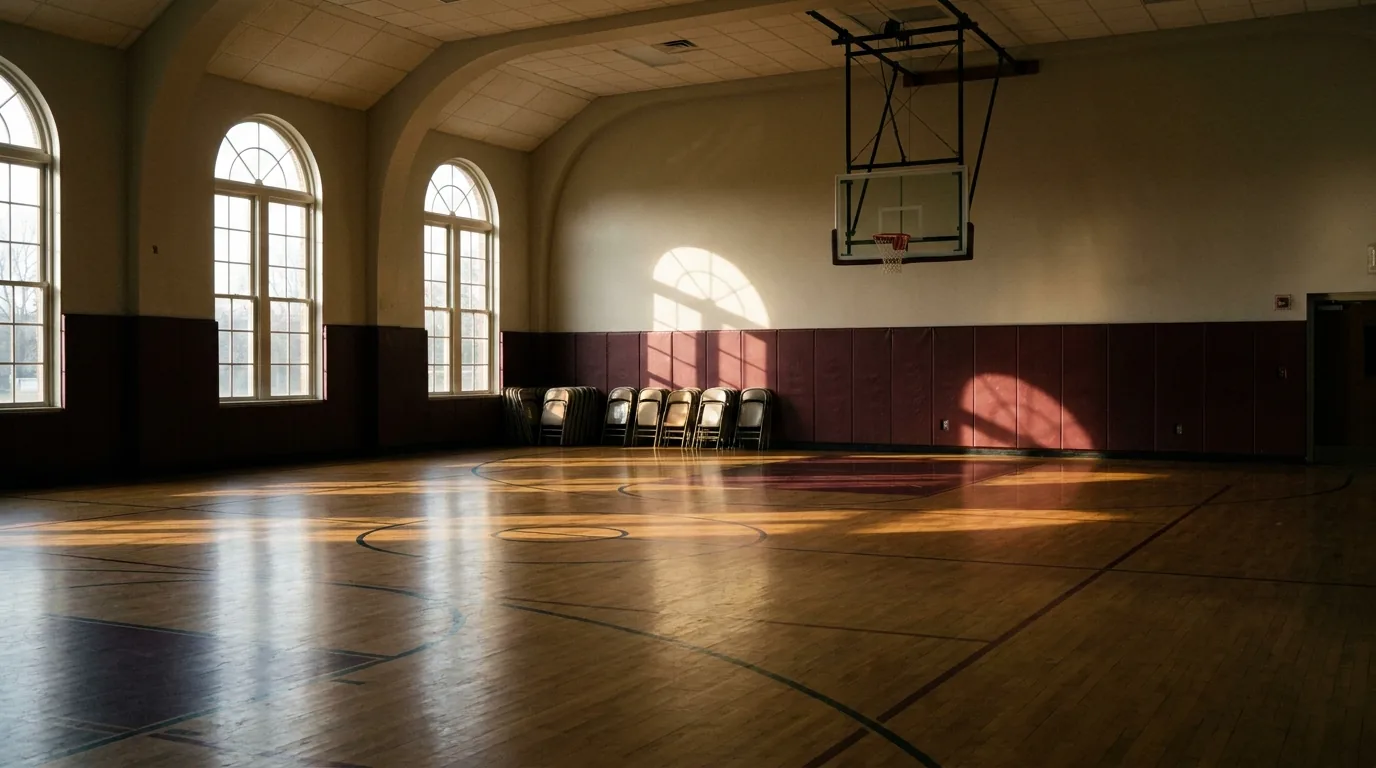
Every panel is available in 16 stock vinyl colors: Gold, Orange, Scarlet, Maroon, Kelly Green, Forest Green, Columbia Blue, Royal Blue, Navy Blue, Purple, Grey, Desert Gold, Brick Red, Sienna Orange, Saddle Brown, and Black. Most schools run one body color for the full wall and use a second color for a logo band or lettering. Order a spare panel with the run if the wall is in a high-contact area: a replacement bought two years later can drift from the original color, and a single mismatched panel in a 40 ft run is obvious from the bleachers.
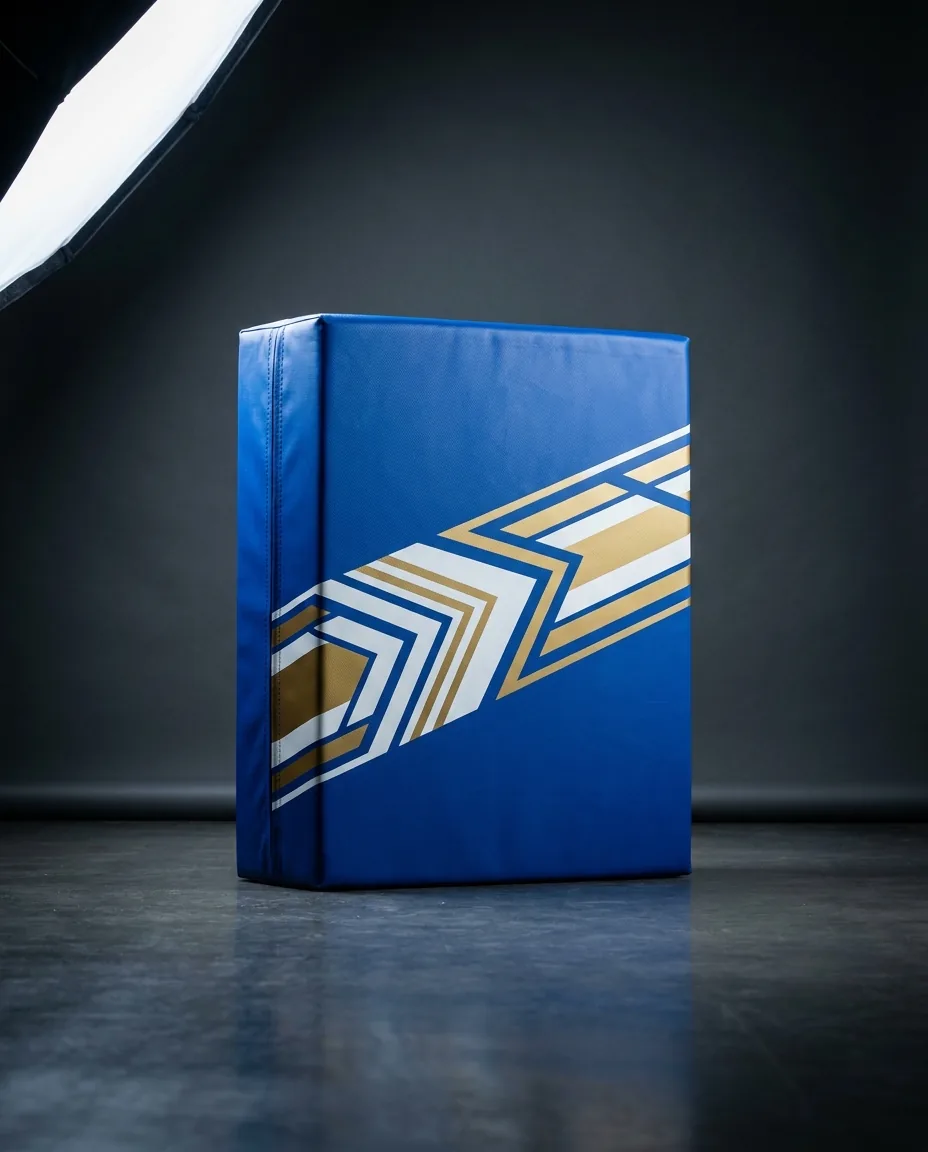
Printed graphics on a wall run need a layout decision the panel size forces on you. A logo that fits inside one 2 ft x 8 ft panel stays crisp and can be replaced on its own. A mascot or wordmark stretched across three panels will show the seams, so the split has to be planned deliberately, usually between letters or at a natural break in the mark. Tell us the run length and the graphic before we quote. File formats, resolution, and how the proof process works are covered on the custom printing page.
Stock wall pads generally ship in 2 to 3 business days. Custom printed panels take longer because artwork has to be proofed and approved first, and custom widths and cutouts are fabricated before the panel leaves. Panels arrive numbered to the layout you approved, so keep the sketch with the crate: it is the difference between an afternoon install and a wall that has to come back down.
- 16 stock vinyl colors, including school standards like Scarlet, Maroon, and Navy Blue.
- Plan whether a logo lives inside one panel or is split deliberately across a seam.
- Order a spare panel up front so a future replacement matches the run.
- Padding carries a 1-Year Limited Warranty.
- Quotes and questions: 917-546-4625, toll free 877-466-7101, sales@mybackyardsports.com
Do I need plywood backing on a concrete block wall?
Usually yes. Mortar joints and uneven courses show through a foam-only pad and create hard high spots. The 7/16 in plywood panel spans those joints and holds the face flat, and it gives the anchor a solid surface to clamp against instead of compressing foam. If the block is unusually smooth and the run is short, foam-only can still work. Send photos of the wall and we will tell you.
What fasteners hold gym wall pads to the wall?
That depends on the wall, not the pad. Hollow block needs an anchor set in the face of the block rather than in a mortar joint. A stud wall needs lags landed in framing, which is easier with a plywood-backed panel because the panel spans between studs. Poured concrete takes a masonry anchor. Tell us the wall type with your quote request so we can tell your installer what to plan for and how many fastening points a run of that length needs.
Can you cut the pads around outlets and door frames?
Yes, and this is the part to get right before you order. Send a dimensioned sketch of each wall run showing the distance from a corner or door jamb to the center of every opening, plus the size of the opening and its height off the floor. Cutouts are fabricated before the panel ships. Cutting a finished panel in the field exposes raw foam at the edge and voids the warranty on that panel.
Are your wall pads Class A fire rated?
We do not publish a fire rating claim for these panels, and what the ASTM E84 flame spread bands mean is explained on our materials and standards page. If a fire marshal or architect is reviewing your gym project, ask us before you order so we know what documentation the submittal needs and whether we can supply it.

Start a quote
Send us the
measurements.
Tell us the post size or the wall run, the colors you need, and whether it lives indoors or out. You will get a written quote back with a real lead time on it.
- A written lead time on every quote
- Purchase orders and W9 on request
- A proof before anything is cut